 JOB SEARCH RESEARCH · OCTOBER 23, 2026
Ask for Useful Feedback, Not a Verdict on Your Potential
Job-search feedback can help, but not every judgment deserves equal weight. Ask for specific evidence, separate rejection from diagnosis and test one change.
Read article → REMOTE WORK RESEARCH · OCTOBER 23, 2026
Turning Off Notifications Is Only Half an Inbox Plan
Fewer alerts do not always mean fewer interruptions. Use email research to agree a response window, protect focused work and keep urgent messages reachable.
Read article → INTERVIEW RESEARCH · OCTOBER 23, 2026
Close Your Notes: A Better Way to Practise for a Job Interview
Reading an answer is not the same as recalling it. Use learning research to build a practical interview rehearsal with honest examples and useful feedback.
Read article → HIRING RESEARCH · OCTOBER 22, 2026
Before You Accept: Ask to See What the Job Is Really Like
A realistic job preview can reveal daily work and difficult trade-offs before an offer decision. Use these questions to assess a remote role more clearly.
Read article → REMOTE WORK COMPENSATION · OCTOBER 22, 2026
Paid per Task? Count the Whole Job Before Comparing Rates
For remote work paid by accepted output, compare the task rate with research, revisions and unpaid admin time. Use a clear example and questions to ask first.
Read article → JOB SEARCH RESEARCH · OCTOBER 22, 2026
A Weekly Job-Search Plan That Turns Intentions Into Actions
A field experiment offers a useful reason to plan your job search. Build a practical week around specific actions, eligibility checks and a simple review.
Read article →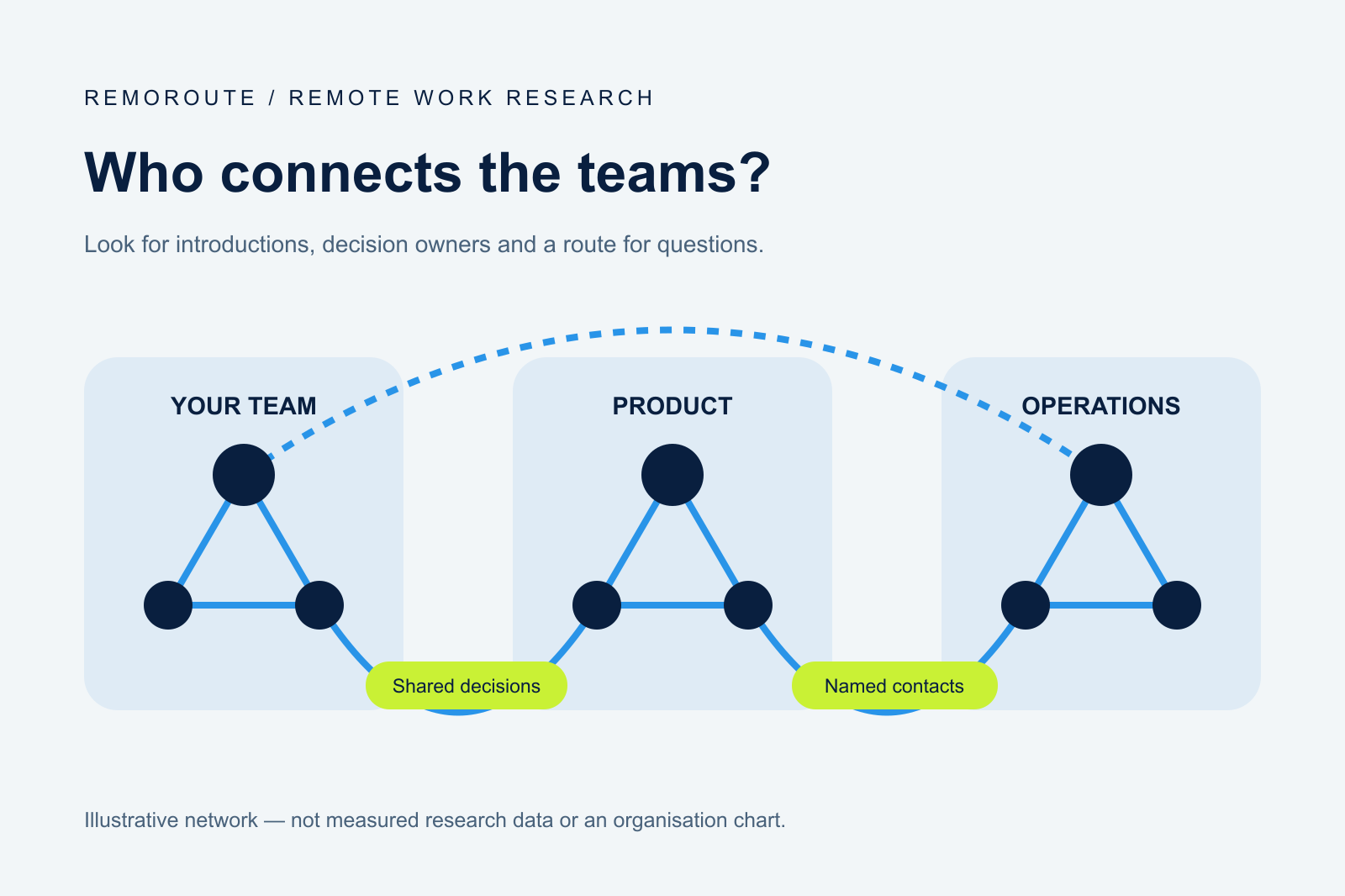 REMOTE WORK RESEARCH · OCTOBER 21, 2026
Before Joining a Remote Team, Ask How You Will Meet the Rest of the Company
Studies of workplace communication suggest remote teams need deliberate bridges between groups. Use these questions to assess access before accepting a role.
Read article →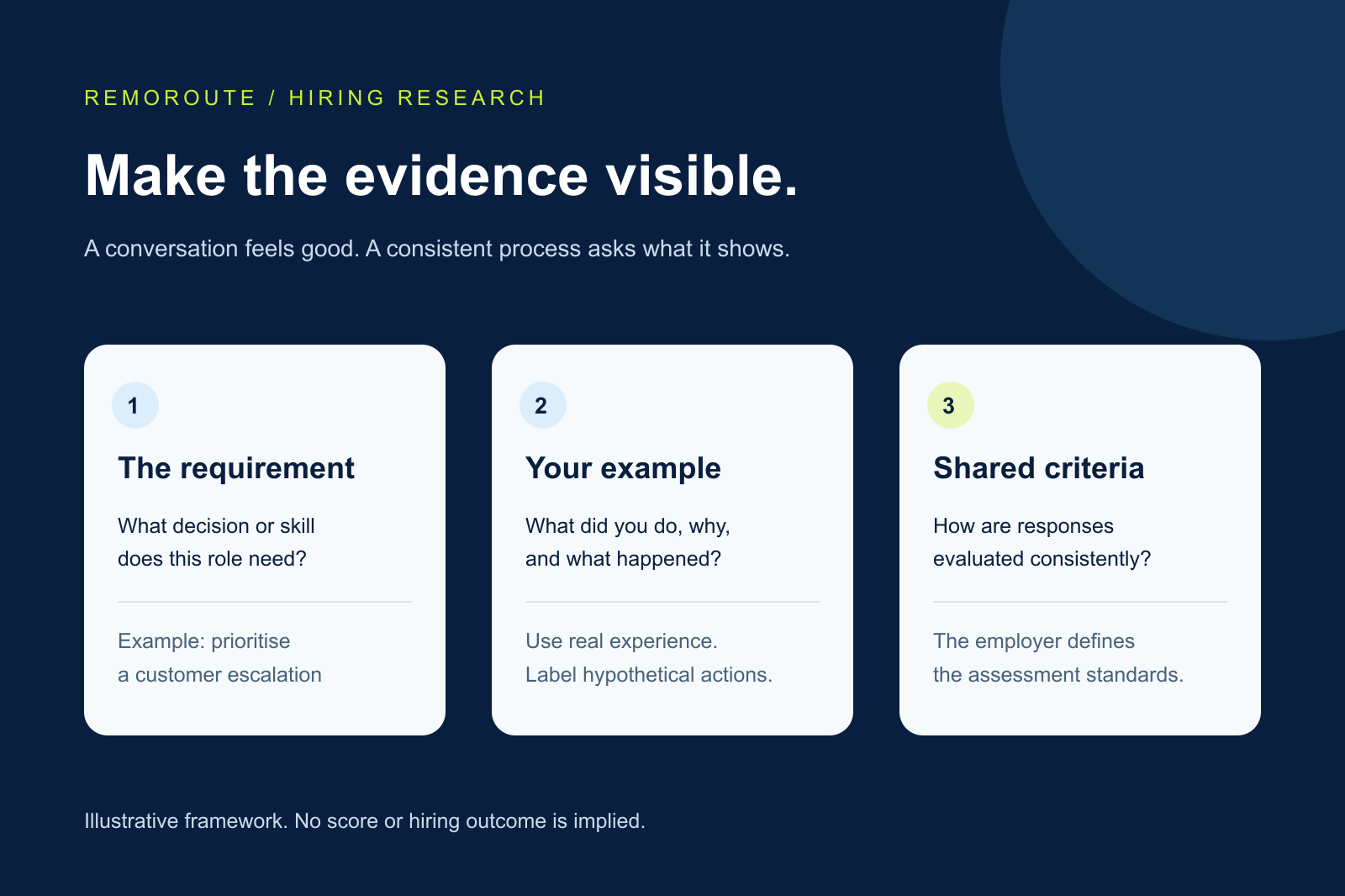 HIRING RESEARCH · OCTOBER 21, 2026
A Friendly Interview Is Not a Scorecard: How Structured Questions Work
Learn why structured interviews use shared questions and scoring criteria, how to prepare honest examples, and what a candidate can ask about the process.
Read article →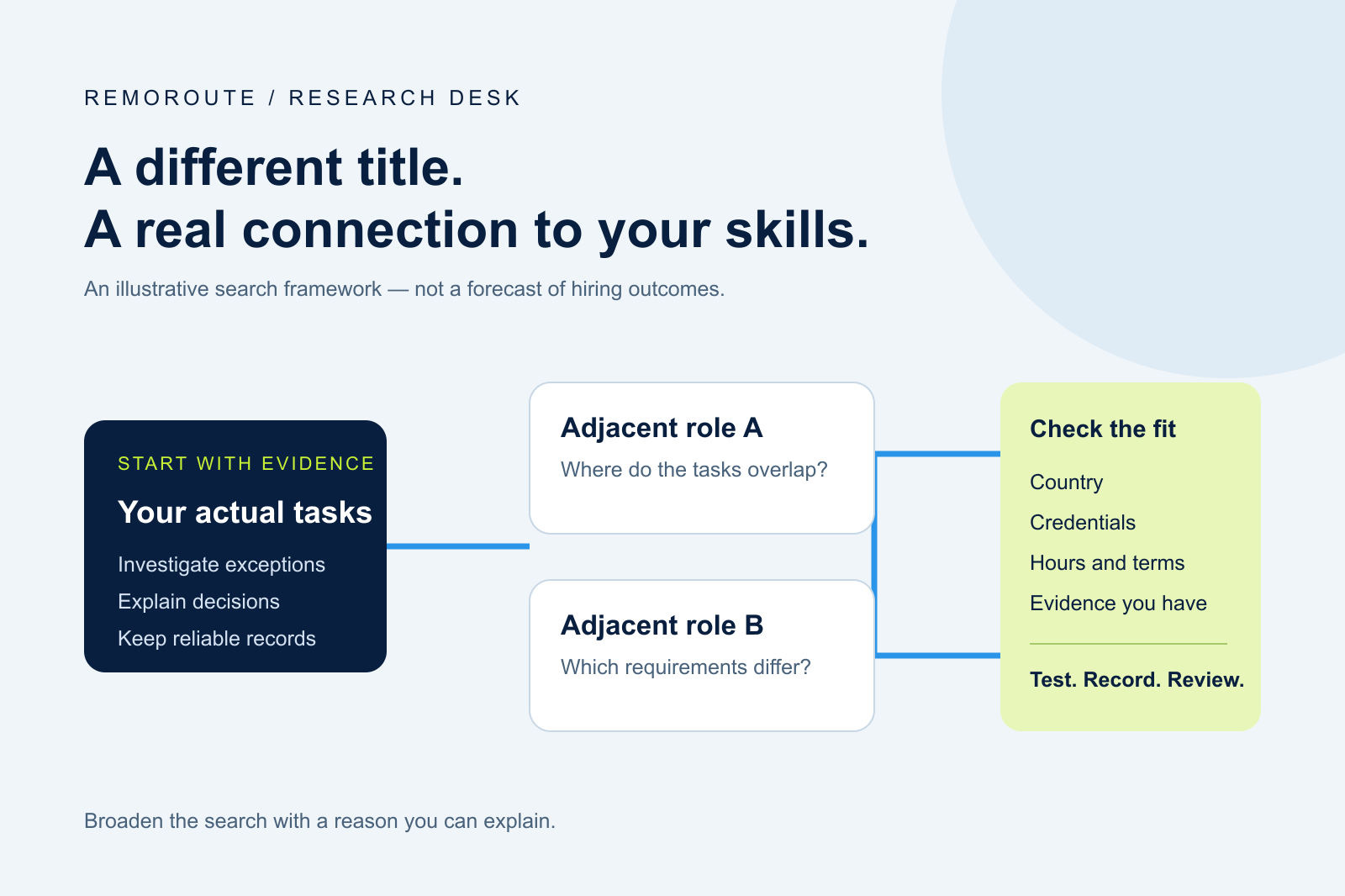 JOB SEARCH RESEARCH · OCTOBER 21, 2026
Should You Search for a Different Job Title? What Two Experiments Tell Us
Research on occupational job-search advice offers a useful lesson: test adjacent roles against your real skills and constraints, rather than chase every opening.
Read article → Job-search research · OCTOBER 20, 2026
Your Next Job Lead May Come from Someone You Barely Know
A large LinkedIn experiment tested how connections affect job mobility. Here is what weak ties can teach jobseekers, without turning networking into mass outreach.
Read article → Applications & evidence · OCTOBER 20, 2026
Can a Better-Written CV Change Your Chances? Inside the 8% Finding
A large experiment found a hiring benefit from writing assistance. Understand the 8% result, its limits and a practical way to edit your CV without inventing facts.
Read article → Hiring research · OCTOBER 20, 2026
Qualified, but Filtered Out: What the Hidden-Worker Research Really Says
A Harvard and Accenture study explains how hiring filters can miss capable people. Here is what its findings mean for career gaps and your next application.
Read article → WORK & CAREER DISCUSSION · OCTOBER 20, 2026
Seven Work Debates Worth Having: Degrees, Hours, Algorithms and Robots
Seven evidence-aware work debates on degrees, shorter weeks, creativity, mentoring, algorithms, early careers and robotics, with primary sources and caveats.
Read article → AI & WORK RESEARCH · OCTOBER 20, 2026
The AI Skills Paradox: Who Will Know Enough to Check the Machine?
A source-backed examination of AI, skill formation and meaningful human oversight, separating experimental findings from practical proposals for team learning.
Read article → APPLICATION SAFETY · OCTOBER 18, 2026
Before a Recruiter Runs a Background Check: What Candidate Data Should Be Clear
A practical candidate checklist for pre-employment vetting: what is being checked, why it is relevant, who receives the data and how long it is kept.
Read article → JOB APPLICATION PRACTICE · OCTOBER 18, 2026
Need an Adjustment for a Virtual Interview? How to Make a Clear Request
A practical guide to requesting an application-process adjustment for a virtual interview while keeping the request focused on access, timing and participation.
Read article → JOB APPLICATION PRACTICE · OCTOBER 18, 2026
Salary Expectations on a Remote Job Application: A Safer Way to Answer
A practical, evidence-aware way to prepare a remote-job salary answer without inventing a market rate or sharing private financial details too early.
Read article → PRACTICAL WORK RESEARCH · OCTOBER 16, 2026
AI Saved You Time. Why Is Your Calendar Still Full?
Research across 66 firms offers a starting point for understanding why individual AI time savings do not automatically redesign a team's working day.
Read article → REMOTE WORK RESEARCH · OCTOBER 16, 2026
Does Your Career Need an Office Chair? What Hybrid-Work Research Actually Shows
A randomised hybrid-work trial and collaboration research challenge simple claims about promotion, performance and being seen in the office.
Read article → AI & WORK RESEARCH · OCTOBER 16, 2026
AI Makes Work Feel Faster. What Happens When We Measure It?
Developer experiments and workplace research reveal why speed, useful output and perceived productivity can tell different stories about AI.
Read article → LABOUR MARKET RESEARCH · OCTOBER 13, 2026
When AI Changes the Labour Market, Who Captures the Gains?
A research-based examination of AI exposure, job transformation, productivity, entry-level work and the distribution of gains across the labour market.
Read article → REMOTE WORK · OCTOBER 9, 2026
Remote, hybrid or flexible? How to read the working arrangement in a job advert
Remote, hybrid and flexible are not interchangeable. Use the job advert to identify where, when and how work is expected before you invest in an application.
Read article → JOB-SEARCH SAFETY · OCTOBER 9, 2026
A recruiter sends a file or asks you to install an app: what to check first
A real-looking interview attachment or meeting app can still be unsafe. Verify the sender, purpose, domain and file route before you download or install anything.
Read article → HIRING ASSESSMENTS · OCTOBER 9, 2026
Remote job assessments: what candidates should know about data, scoring and privacy
Before a remote assessment, understand its purpose, timing, platform, data use and scoring route so you can prepare without giving away more than necessary.
Read article → APPLICATION PRIVACY · OCTOBER 8, 2026
Before you send a CV or portfolio PDF: check the hidden personal data
A polished CV can contain document properties, comments, revision history or hidden layers. Check your file before sharing data beyond a job application.
Read article → REMOTE WORK SECURITY · OCTOBER 8, 2026
A remote employer wants to manage your personal device: what to ask before you enrol
Before enrolling a personal laptop or phone, clarify device-management permissions, monitoring, data separation, remote-wipe rules and offboarding.
Read article → APPLICATION SAFETY · OCTOBER 8, 2026
A remote employer asks for your passport or ID: when to share it and how to check the request
Identity checks can be legitimate after a genuine hiring step. Confirm the employer, timing, provider, data requested and secure route before sharing ID.
Read article → CONTRACT CHECK · OCTOBER 5, 2026
Confidentiality and IP clauses in a remote job contract: what to check
Before signing a remote work agreement, identify what is confidential, who owns new work, which prior materials stay yours and how long duties last.
Read article → INTERVIEW SAFETY · OCTOBER 5, 2026
Is that remote interview invitation safe? Check the link before you join
A practical check for remote interview invitations: verify the sender, meeting domain, event details, permissions, recording notice and fallback contact.
Read article → JOB-SEARCH SAFETY · OCTOBER 5, 2026
A remote employer asks for bank details: what to verify before direct deposit
Before sharing bank details for remote-job payroll, verify the employer, hiring stage, onboarding route, data requested and a trusted HR contact.
Read article → REMOTE WORK PRACTICALITIES · SEPTEMBER 27, 2026
Can you work remotely from another country for a few weeks? What to check first
A practical pre-travel check for remote employees: get employer approval, confirm work location, security, hours, insurance and country-specific tax or social-security questions.
Read article → APPLICATION PRIVACY · SEPTEMBER 27, 2026
Can an employer check your social media before hiring? What candidates can ask
Understand public social-media checks in recruitment: what an employer may disclose, when consent or notice matters, how to correct errors and why rules vary by jurisdiction.
Read article → REMOTE WORK PRACTICALITIES · SEPTEMBER 27, 2026
Remote-work expenses: what to ask about equipment, internet and reimbursements
Before accepting a remote role, clarify who provides equipment, internet, workspace support and reimbursements — and how ownership, approval, receipts and local tax rules work.
Read article → CONTRACT WORK · SEPTEMBER 24, 2026
Remote contractor invoices: payment terms to confirm before you start
Protect a remote contract by agreeing scope, acceptance, currency, fees, invoice details, due dates and a documented late-payment route before work begins.
Read article → WORKPLACE SUPPORT · SEPTEMBER 24, 2026
How to request a remote-work adjustment after you start a job
Prepare a clear remote-work or workplace-adjustment request by identifying the barrier, essential duties, workable changes, review points and written follow-up.
Read article → REMOTE WORK SECURITY · SEPTEMBER 24, 2026
Working remotely on public Wi-Fi: a practical security checklist
Use public Wi-Fi more safely for remote work by verifying the network, following employer policy, protecting accounts and choosing a trusted alternative for sensitive tasks.
Read article → REMOTE WORK · SEPTEMBER 23, 2026
Starting a remote job: a first-week onboarding checklist
Use a first-week remote onboarding checklist for verified access, role priorities, communication, training, workplace support, health and security.
Read article → REMOTE WORK SECURITY · SEPTEMBER 23, 2026
Working remotely on home Wi-Fi: a practical router security check
Review router updates, administrator credentials, Wi-Fi encryption, remote management, connected devices and employer access before remote work.
Read article → JOB SEARCH SAFETY · SEPTEMBER 23, 2026
A recruiter asks you to install remote-access software: stop and verify
Use this safety check before allowing a recruiter, interviewer or supposed IT technician to view, control or install software on your computer remotely.
Read article → REMOTE WORK · SEPTEMBER 22, 2026
Remote-work ergonomics: a practical home workstation checklist
Use a practical home-workstation check for screen height, input devices, chair support, lighting, movement and when to report persistent discomfort.
Read article → AI & WORK · SEPTEMBER 22, 2026
Before you paste work into an AI tool: a confidential-data checklist
Check permissions, personal data, client confidentiality, retention and redaction before placing workplace documents or messages into any public AI tool.
Read article → JOB SEARCH SAFETY · SEPTEMBER 22, 2026
Paid online task job scams: what to do before you add your own money
Learn how fake paid-task jobs use locked balances, simple online actions and cryptocurrency deposits—and what to do before sharing money or personal data.
Read article → JOB OFFERS · SEPTEMBER 21, 2026
Remote job probation periods: what to clarify before your first day
Check probation length, success measures, review dates, support, extension rules, notice, pay and benefits before starting a new remote employee role.
Read article → REMOTE WORK SECURITY · SEPTEMBER 21, 2026
Using your personal device for a remote job: a BYOD security checklist
Before using a personal phone or laptop for remote work, clarify device management, work-data separation, remote wipe, support, costs and offboarding.
Read article → REMOTE WORK PRIVACY · SEPTEMBER 21, 2026
Remote employee monitoring: questions to ask before you accept the job
Before accepting a remote role, clarify screenshots, keystrokes, webcam access, productivity scores, retention and how monitoring data affects decisions.
Read article → JOB OFFERS · SEPTEMBER 19, 2026
Before you accept a remote job, get the key terms in writing
A practical offer-review checklist for pay, hours, probation, notice, location and equipment—so a remote job’s important conditions are not left to a chat message.
Read article → REMOTE WORK · SEPTEMBER 19, 2026
Remote work hours: what ‘flexible’ and ‘core hours’ really mean
Before applying for a remote role, turn vague schedule language into clear questions about time zones, overlap, meetings, response times and availability.
Read article → JOB SEARCH SAFETY · SEPTEMBER 19, 2026
An unexpected job text says ‘reply YES’: what to check before you respond
A practical response plan for generic remote-job texts: verify the employer, protect your information and recognise the first steps of a task or fake-check scam.
Read article → JOB SEARCH SECURITY · SEPTEMBER 18, 2026
How to secure your job-search email against fake recruiter phishing
Protect your job-search email with stronger sign-in, safer recruiter-link checks and a clear recovery plan for suspicious messages or stolen credentials.
Read article → JOB OFFERS · SEPTEMBER 18, 2026
How to compare remote job offers beyond salary
Compare remote job offers across salary, contract type, paid leave, health cover, retirement, working hours and costs before accepting a role.
Read article → JOB SEARCH SAFETY · SEPTEMBER 18, 2026
Remote job equipment scams: what to do when a recruiter sends a check
Learn how fake-check equipment scams work, how to verify a remote employer and what to do before depositing money or paying an unknown supplier.
Read article → REMOTE WORK · SEPTEMBER 17, 2026
Remote does not always mean work from anywhere: check location eligibility before you apply
Why a remote role may still have country, state, payroll or right-to-work limits — and how to ask about eligibility without oversharing documents too early.
Read article → PORTFOLIO & EVIDENCE · SEPTEMBER 17, 2026
How to use past work in a portfolio without sharing confidential information
Show credible work evidence in a job application while protecting former employers, clients, personal data, source files and confidential business information.
Read article → APPLICATION PRIVACY · SEPTEMBER 17, 2026
After you apply: how to read a recruitment privacy notice
A practical guide to checking why an employer collects candidate data, who receives it, how long it may be kept, and which focused questions to ask.
Read article → AI & HIRING · SEPTEMBER 16, 2026
Was your job application filtered by AI? How to request human review
Understand automated CV screening and assessment scores, what notices to save, which questions to ask and when a candidate can request human review.
Read article → APPLICATION PROCESS · SEPTEMBER 16, 2026
Job references: who to choose and when employers should contact them
Prepare job references without surprising your current employer: choose relevant referees, confirm permission, share context and protect unnecessary personal data.
Read article → HIRING ASSESSMENTS · SEPTEMBER 16, 2026
Unpaid trial task or free work? What to check before you begin
A practical checklist for remote take-home assignments and unpaid work trials covering time, scope, real business value, privacy, ownership and payment.
Read article → CANDIDATE PRIVACY · SEPTEMBER 15, 2026
Remote job background checks: what to read before you consent
A candidate checklist for employment background checks covering identity, scope, written permission, report errors, adverse decisions and sensitive data.
Read article → PAY TRANSPARENCY · SEPTEMBER 15, 2026
What a remote job salary range tells you — and what it leaves out
Learn how to read remote salary ranges by pay period, currency, location, seniority and base-versus-total compensation before comparing offers.
Read article → ACCESSIBLE HIRING · SEPTEMBER 15, 2026
How to request reasonable adjustments for a remote job interview
A practical guide to requesting accessible interview formats, extra time, captions, breaks or technology alternatives without oversharing personal information.
Read article → REMOTE WORK CONTRACTS · SEPTEMBER 14, 2026
Employee or independent contractor? What to check in a remote job offer
A practical comparison of employee and contractor offers, including control, payment, taxes, benefits, expenses, equipment and contract terms.
Read article → AI & HIRING · SEPTEMBER 14, 2026
AI video interviews: a candidate privacy and fairness checklist
Questions to ask before an AI-assisted interview about recording, data use, automated decisions, accessibility, retention and human review.
Read article → JOB SEARCH SAFETY · SEPTEMBER 14, 2026
How to tell if a remote job is legitimate before you apply
A practical remote-job verification checklist covering recruiter identity, source links, payment requests, personal data and task-scam warning signs.
Read article → APPLICATION QUALITY · SEPTEMBER 14, 2026
The CV mistakes recruiters notice first — and how to fix them
A calm pre-application CV check: improve scanability, consistency and relevance without padding the document or inventing achievements.
Read article → EARLY CAREER · SEPTEMBER 14, 2026
How to show relevant experience when you are early in your career
Build an honest evidence section from coursework, personal projects, volunteering, internships and part-time work when your formal experience is limited.
Read article → APPLICATION STRATEGY · SEPTEMBER 14, 2026
Your CV is not a biography: how to make the relevant evidence easy to find
A practical CV structure for remote job seekers: prioritise relevant evidence, clear outcomes and honest claims instead of a long career history.
Read article →